
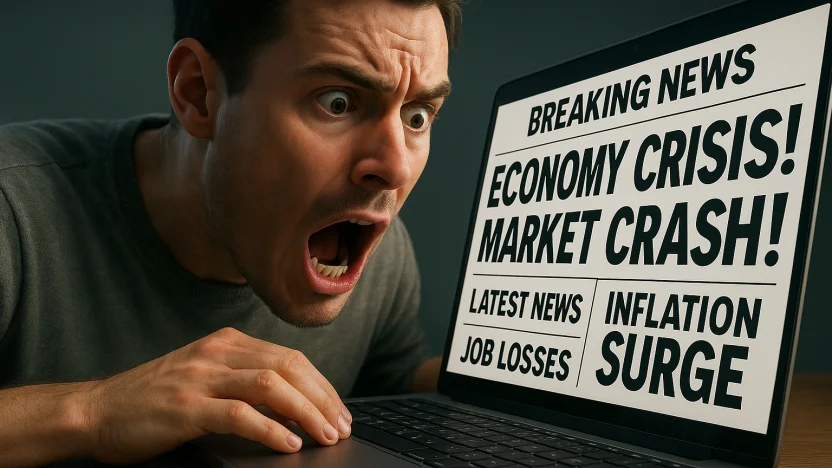
Your headline is the first impression, the handshake, the open door. Get it right and readers glide into your copy; get it wrong and they bounce—fast.
Below is a practical, 2026-ready guide to 15 headline types every copywriter should master. For each one, you’ll get the “why it works,” a quick formula, fresh examples, and pitfalls to avoid—so you can choose the right approach for the job instead of guessing.
Quick Map: Which Headline Type Fits Your Goal?
| Goal | Best-Fit Headline Types | Why |
|---|---|---|
| Drive fast clicks to a listicle or curated post | Listicle, Curiosity Gap, Best/Top, “X vs. Y” | Skimmable value, promises breadth or a verdict |
| Build authority and trust | How-To, “What/Why/How” Explainer, Research/Data | Signals usefulness and expertise |
| Sell a product/offer | Benefit-Driven, Problem–Agitation–Solution (PAS), Objection-Smashing | Marries desire to a clear outcome |
| Rank in search | SEO-Exact, Comparison/Alternatives, Question Headline | Matches explicit query intent |
| Go viral on social | Strong POV/Contrarian, Curiosity Gap, Story/Before–After | Emotion + novelty + shareability |
| Nurture subscribers / thought leadership | Framework/Model, Mistakes/Traps, Myth-Busting | Promises insight beyond the obvious |
15 Types of Headlines You Need to Know as a Copywriter

(With Formulas, Psychology & Real Examples)
1) Benefit-Driven Headlines
Why they work: People buy outcomes. A benefit headline anchors on the reader’s desired future, not your features.
Formula: Get [Primary Result] without [Big Objection] in [Timeframe]
Examples:
• “Get Month-End Reports in 10 Minutes—Without Excel Macros.”
• “Sleep Through the Night in 7 Days—Without Prescription Meds.”
Use when: Landing pages, ads, product announcements.
Pitfall: Overpromise. Add a qualifier if needed (“on average,” “for most teams”).
2) How-To Headlines
Why they work: Utility is irresistible. “How-to” triggers the brain’s “I can do this” switch.
Formula: How to [Do Outcome] even if [Obstacle]
Examples:
• “How to Launch a Podcast in 30 Days—even if You Hate Your Voice.”
• “How to Cut Cloud Costs 28% without Rewriting Your App.”
Use when: Tutorials, blog posts, video titles, lead magnets.
Tip: Add a specific metric or constraint (budget/time/tools) to sharpen intent.
3) Listicle Headlines
Why they work: Numbers promise scope and scannability. Readers know what they’ll get.
Formula: [Odd Number] [Things/Tips/Ideas] for [Audience] to [Outcome]
Examples:
• “17 Email Subject Lines That Lifted Open Rates 40%.”
• “9 Budget Dinners Kids Actually Eat.”
Use when: Content hubs, social traffic, SEO targets.
Pitfall: Empty padding. If you don’t have 17 good items, don’t say 17.
4) Curiosity-Gap Headlines
Why they work: Information gaps create tension the brain wants to close. Used ethically, they boost clicks without baiting.
Formula: [Unexpected Claim]—Here’s What Happened When [Specific Action]
Examples:
• “I Stopped Using To-Do Lists—Here’s What Happened to My Output.”
• “We Turned Off 32% of Our Ads. The Revenue Curve? Not What You’d Guess.”
Use when: Case studies, personal experiments, social.
Pitfall: Don’t tease and switch. Pay off the curiosity early in the content.
5) Problem–Agitation–Solution (PAS) Headlines
Why they work: They mirror the reader’s pain, intensify the stakes, then offer relief.
Formula: Tired of [Problem]? Here’s a Faster Way to [Solution]
Examples:
• “Drowning in Tabs? The 3-Folder System That Ends Browser Chaos.”
• “Churn Still Rising? Fix the 5 Onboarding Moments That Kill Adoption.”
Use when: Emails, landing pages, retargeting ads.
Tip: Keep the “agitation” empathetic—never shame your reader.
6) Best/Top/Ultimate Guide Headlines
Why they work: Promise completeness and curation—perfect for high-intent searchers.
Formula: The Ultimate Guide to [Topic] for [Audience] in [Year]
Examples:
• “The Ultimate Guide to TikTok Ads for Local Businesses in 2026.”
• “Top 23 Standing Desks for Remote Teams (Tested & Ranked).”
Use when: SEO pillars, cornerstone content, affiliate roundups.
Pitfall: “Ultimate” must earn its name. Depth, recency, and original angles are mandatory.
7) Question Headlines
Why they work: They mirror the exact query in the reader’s mind, increasing relevance.
Formula: Can You [Desired Result] Without [Common Objection]?
Examples:
• “Can You Rank on Google Without Backlinks in 2026?”
• “Is a High-Protein Diet Safe for Marathon Training?”
Use when: SEO articles, FAQs, YouTube titles.
Tip: Answer the question clearly in your intro to satisfy searcher intent.
8) “X vs. Y” Comparison Headlines
Why they work: They meet decision-stage readers who are weighing options.
Formula: [Product A] vs. [Product B]: Which Is Better for [Use Case]?
Examples:
• “Notion vs. Obsidian: Which Is Better for Knowledge Teams?”
• “Heat Pump vs. Gas Furnace: The 2026 Cost-of-Ownership Showdown.”
Use when: Bottom-funnel SEO, affiliate content, retargeting.
Pitfall: False balance. If there’s a clear winner for a use case, say it—and why.
9) Mistakes/Traps Headlines
Why they work: Loss aversion. People act faster to avoid pain than to gain a benefit.
Formula: [Number] [Common] Mistakes That [Audience] Still Make (and How to Fix Them)
Examples:
• “11 Hiring Mistakes Startups Still Make at Seed.”
• “7 Form Design Traps That Tank Conversions.”
Use when: Email newsletters, coaching content, B2B blogs.
Tip: Pair each mistake with a quick correction so the piece feels constructive, not scolding.
10) Myth-Busting/Contrarian Headlines
Why they work: Novelty bias. A strong POV slices through sameness—if you can defend it.
Formula: [Common Belief] Is Costing You [Outcome]. Here’s the Better Play.
Examples:
• “More Content Won’t Fix Your SEO in 2026.”
• “Stop Chasing ‘Viral.’ Build Distribution Instead.”
Use when: Thought leadership, LinkedIn posts, op-eds.
Pitfall: Edgy without substance. Back your claim with data and examples.
11) Research/Data Headlines
Why they work: Specificity + credibility. Numbers promise proof and teach something new.
Formula: [Study/Benchmark]: [Surprising Finding] about [Audience/Channel]
Examples:
• “We Analyzed 3.2M Blog Titles—Here’s What Drove the Most Clicks.”
• “The 2026 Remote Pay Report: Hybrid Teams Are Earning 9.4% More.”
Use when: Original research posts, PR hooks, lead magnets.
Tip: Lead with the punchline metric; save methodology for later sections.
12) Objection-Smashing Headlines
Why they work: They remove the mental brakes that stop people from acting.
Formula: [Outcome] Without [Costly/Scary Thing]—Here’s How
Examples:
• “Automate Customer Feedback—Without Annoying Surveys.”
• “Enterprise-Grade Security—Without a Six-Figure Contract.”
Use when: Feature launches, competitor takeaways, sales enablement.
13) Story/Before–After Headlines
Why they work: Transformation is the heart of persuasion. Humans remember stories, not specs.
Formula: From [Pain State] to [Desired State] in [Timeframe]: What Changed
Examples:
• “From 17 Tools to 1: How We Unified Support in 6 Weeks.”
• “From Burnout to Booked: The Freelance Reset That Worked.”
Use when: Case studies, founder stories, testimonials.
Tip: Include the clock (“in 6 weeks”) to telegraph speed-to-value.
14) Framework/Model Headlines
Why they work: People love named systems—memorable, teachable, and “ownable.”
Formula: The [Acronym] Framework: A Simpler Way to [Outcome]
Examples:
• “The TAPS Framework: Write Headlines That Hook in 60 Seconds.”
• “The L.E.A.N. Method for Cutting Martech Bloat.”
Use when: Thought leadership, courses, sales content.
Tip: Make your acronym pronounceable. You want people to repeat it.
15) Time-Bound/Trending Headlines
Why they work: Freshness signal + urgency. Perfect for seasonal or news-jacked content.
Formula: What [Change/Event] Means for [Audience] This [Season/Year]
Examples:
• “What Google’s 2026 Core Update Means for Niche Sites.”
• “Holiday Shipping in 2026: 8 Surprises to Plan Around.”
Use when: Newsletters, timely SEO, PR content.
Pitfall: “Timestamp decay.” Update or retire when the moment passes.
Headline Craft: Micro-Skills That Compound Results
- Lead with the strongest word. “Stop Wasting Ad Spend: 7 Fixes” > “7 Fixes to Stop Wasting Ad Spend.”
- Prefer concrete over clever. “Cut Cloud Costs 28%” > “Harness Fiscal Efficiency.”
- Use power-pairs. Pair an action verb with a measurable result: “Automate Onboarding, Boost Activation 19%.”
- Front-load keywords (for SEO). “Heat Pump vs. Furnace: 2026 Cost Showdown” (not “Which Heating System Should You Choose?”)
- Test polarity. Positive (“Do X to Gain Y”) vs. negative (“Stop X That’s Costing You Y”). Different audiences respond differently.
Swipeable Formulas (Copy & Adapt)
• How to [Outcome] in [Timeframe] without [Pain]
• [Number] Little-Known Ways to [Outcome] (Backed by [Proof])
• Stop [Annoying Problem]: Try This [Short, Specific Fix]
• [A] vs. [B]: Which Is Better for [Use Case] in [Year]?
• The [Acronym] Framework: Your Shortcut to [Outcome]
• We Tested [X] So You Don’t Have To—Here’s What We’d Actually Buy
• [Shocking/Useful Finding]: What It Means for [Audience]
Editing Checklist (60-Second Headline Polish)
- Is the reader’s outcome unmistakable?
- Have you removed fluff adjectives (amazing, incredible) and added specifics (numbers, timeframes, constraints)?
- Does it pass the one-breath test (read aloud once, no stumble)?
- Is there a clear keyword for search or a clear hook for social?
- Could a busy scroller understand the promise in two seconds?
Real-World A/B Testing Ideas
- Number vs. no number: “How to Reduce Churn” vs. “7 Ways to Reduce Churn (That Work in 30 Days).”
- Outcome vs. mechanism: “Lower CPA 22%” vs. “Win More Second-Price Auctions.”
- Question vs. statement: “Are AI Summaries Killing SEO?” vs. “AI Summaries Are Rewriting SEO (Here’s Your Playbook).”
- Time constraint: Add “in a week,” “today,” “before launch” to test urgency.
When Your Headline Isn’t Converting (Troubleshooter)
- CTR low, time-on-page high: Your headline may not match the audience/channel. Retarget with a more curiosity-led angle.
- CTR high, bounce high: Headline promise ≠ content reality. Tighten alignment and deliver value in the first screen.
- Great engagement, poor conversions: Switch from curiosity to benefit or PAS; add a clear “what to do next.”
Mini Swipe File by Niche (Use as Seeds)
SaaS/B2B
• “From Tickets to Topics: The Support Workflow That Cut Response Times 41%.”
• “SOC 2 Without the Spiral: A Founder’s 60-Day Checklist.”
E-commerce
• “We Tried 12 Weighted Blankets—These 3 Actually Stay Cool.”
• “Capsule Kitchen: 21 Tools That Replace 53 Gadgets.”
Personal Finance
• “The 6-Account System That Made Saving Automatic.”
• “Index Funds vs. Dividend Stocks: What Makes You Wealthier by 2040?”
Health/Fitness
• “Build Knee-Friendly Strength in 20 Minutes a Day.”
• “Macros for Beginners: The 14-Day Reset That Doesn’t Ban Bread.”
Career/Creator
• “Write 5 LinkedIn Posts in 45 Minutes (Template Inside).”
• “Freelance Pricing: 7 Scripts That Close Premium Clients.”
Final Word
Headlines aren’t decoration—they’re the product’s front door. Pick the type that matches your reader’s stage (curious, comparing, ready to act), phrase it with concrete outcome language, and test small changes relentlessly. Master these 15 archetypes and you’ll never stare at a blinking cursor again—you’ll have a toolkit you can trust across niches, channels, and offers.
Pro move: Keep a living swipe file. Every time a headline makes you click, save it, tag the type, and rewrite it for your niche. Skill compounding, on autopilot.




[…] your headers with images using any TrueType font you choose. It’s mostly a rework of the Image Headlines plugin. It has been tested with WP 1.5.2 up through […]
[…] is the cyber-threat that has been growing for years, but finally hit mainstream headlines in 2017 with the WannaCry infection. This worldwide attack affected businesses of all sizes around […]
[…] copywriting pros have a way with words that mere mortals can only dream of. They know how to craft headlines that grab attention, use persuasive language to influence consumer behavior, and create content […]
[…] a strong headline: Use attention-grabbing headlines that accurately represent the content of your Facebook Paragraph. This will entice users to read […]
[…] engaging: Your emails should be creative, concise, and visually appealing. Use attention-grabbing headlines and images to keep your readers […]
[…] make your content visually appealing and easy to read. Use attention-grabbing headlines, bullet points, and engaging visuals. Break down complex topics into digestible chunks, making it […]
[…] strong headlines: Your headline should be attention-grabbing and clearly communicate what your offer is all […]
[…] your target keywords in your headlines, meta descriptions, and body copy. Just be sure not to stuff your content with too many keywords […]
[…] effective in achieving your marketing goals. By testing different elements of your campaign such as headlines, images, and calls to action, you can identify the most effective combination for your target […]
[…] headlines are crucial for attracting readers to blog content. With so much content available online, […]
[…] to optimize your multi-channel campaigns. Salesforce lets you test different variables such as headlines, images, and call-to-actions to see what drives the most engagement and […]
[…] perspectives. For example, in content creation, generative AI tools can generate blog post ideas, headlines, or even entire articles based on a given topic. This saves content creators time and provides them […]
[…] high-quality content that is both informative and entertaining. This includes writing catchy headlines, using eye-catching visuals, and incorporating interactive elements like quizzes or […]