

Is the Samsung S8 still worth buying in 2025? The Samsung Galaxy S8 was released in 2017 and has been on the market for several years. While it was a popular phone when it was first released, it may not be the most up-to-date option available in 2025.
| Parameter | Samsung Galaxy S8 Assessment in 2025 |
| Performance | AMOLED display still offers vibrant colors but lacks the higher refresh rates and resolution of newer phones. |
| Software Updates | Unlikely to receive any new software updates, which may affect both security and the availability of new apps/features. |
| Battery Life | The design might feel dated; durability could be compromised over years of use. Waterproofing seals may also degrade. |
| Camera Quality | The camera may still produce decent images but lacks features like night mode or advanced AI enhancements of newer models. |
| Display | The secondhand market could make this a very affordable option, but be mindful of the cost of any necessary repairs or battery replacement. |
| Design and Build | Design might feel dated; durability could be compromised over years of use. Waterproofing seals may also degrade. |
| Features | The AMOLED display still offers vibrant colors but lacks the higher refresh rates and resolution of newer phones. |
| Price | The second-hand market could make this a very affordable option, but be mindful of the cost of any necessary repairs or battery replacement. |
| Ecosystem Integration | Some Samsung ecosystem features may be incompatible due to outdated software. |
| Resale Value | Very low resale value; not an investment but a stopgap solution if current smartphone needs are minimal. |
By 2025 the Galaxy S8 is basically a vintage collectible rather than a daily driver:
- Zero OS updates & security risk. Samsung stopped major Android upgrades after Pie (9.0) and ended security patches in April 2021—so you’re running an eight-year-old, unpatched phone (Android Central).
- App-compatibility headaches. Chrome (and many apps) will only support Android 10+ after August 5, 2025—your S8 on Pie misses out on future browser fixes (Android Central).
- Battery & performance. The 3 000 mAh cell has lost much of its mojo; replacements cost €20–30, adding to your “bargain” (eBay UK). The Exynos 8895/Snapdragon 835 struggles with today’s heavy apps.
- Modern alternatives rock. For €200–€300 you can get a Pixel 6a or Galaxy A54—four years of security updates, far better cameras, batteries and speed.
Bottom line: Only grab an S8 if you want a throwback toy/backup. Otherwise spend a bit more once and enjoy a secure, smooth ride for years.
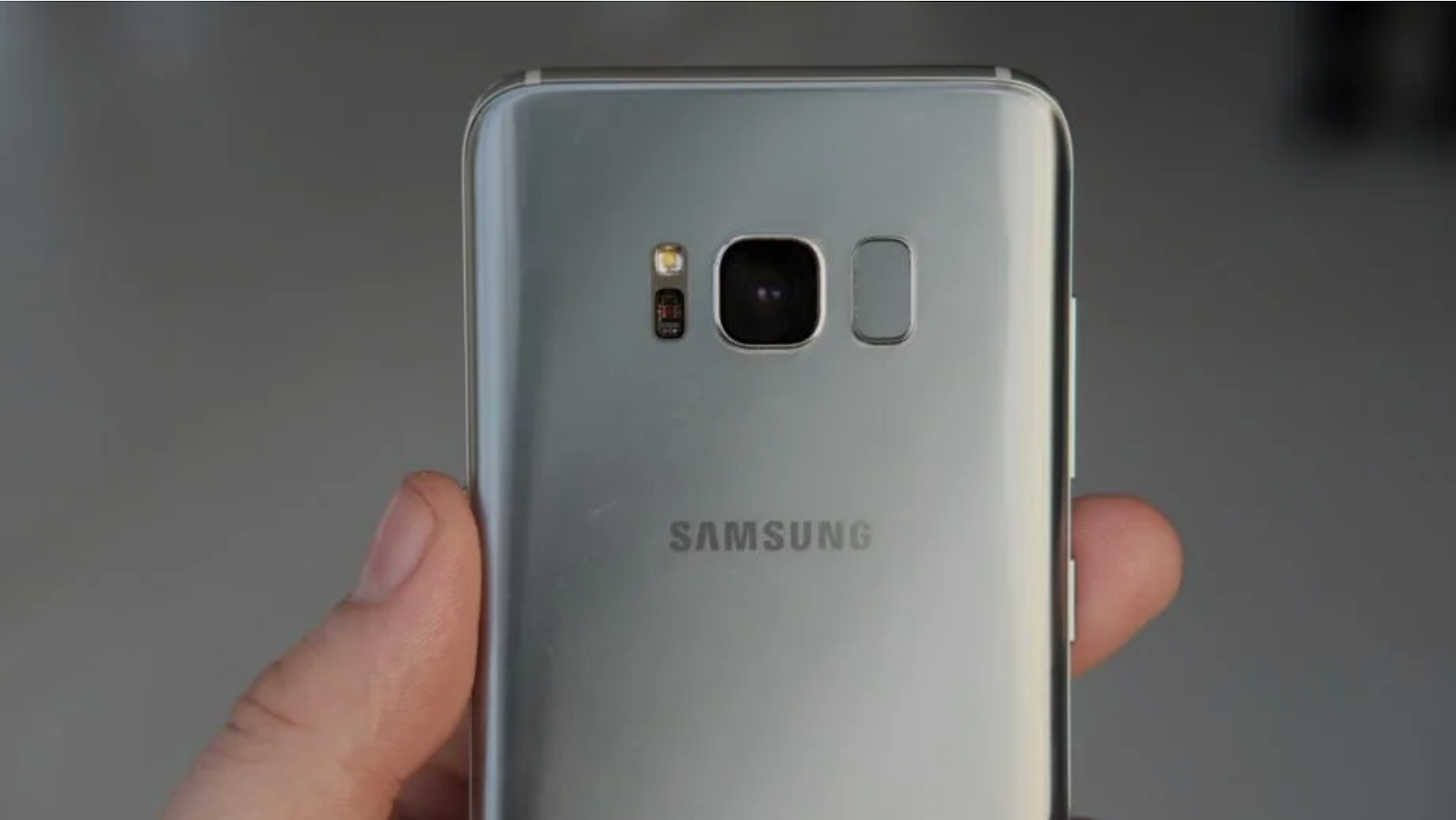
But… Suppose you are considering buying a Samsung Galaxy S21. In this case, it is important to remember that technology is evolving rapidly and that new models with advanced features have been launched since the S8 was launched. You should compare the specs and features of the S8 with newer models to see if it’s the best option for you. You should also consider factors such as price, the availability of software phones, and the overall longevity of the phone before making a purchase decision.
If you’re considering a Galaxy S8 in 2025, it would primarily be for basic smartphone functions, and the price would be a major deciding factor. For anyone looking for modern features and a phone that will last several more years, it would be advisable to look at newer models. ????????
My Experience Using the Samsung Galaxy S8 in 2025
The Samsung Galaxy S8 was once the crown jewel of the smartphone world. When it launched in 2017, it shone with a sleek design, a stunning Infinity Display, and features that made tech fans swoon. But in 2025, the Galaxy S8 feels more like a relic than a smart driver from here.
Here’s how my experience went.
???? Performance Woes
Switching from a modern phone to the Galaxy S8 was like going from a sports car to a bicycle. Sure, it gets you where you need to go, but the ride is anything but smooth.
- Laggy Performance: The first thing I noticed was the lag. Apps that would open instantly on a newer device took their sweet time on the S8. Scrolling through social media felt choppy, and multitasking was a nightmare.
- Batthere’sain: Then there’s the battery. Even with light usage, the S8 struggled to make it through the day. The battery, which was impressive back in 2017, now drains faster “than you can say low power mode.”
???? Camera Quality
Remember the S8? The Galaxy S8’s camera was considered top-notch in 2025; it’s a different story.
- Outdated camera technology: Compared to the multi-lens setups of modern S8 phones, the camera of the S8 seems incredibly simple. The low-light performance in particular is poor, and the photos look grainy and washed out compared to what you’d expect from even a mid-range 2025 device.
- Lack of Software Updates: Another problem is the outdated software. The camera app lacks the advanced features and AI enhancements that make modern cameras so powerful. Forget night mode or advanced image effects—you’ll have to make do with the basics.
???? Connectivity Challenges
It feels like a step back in time to an era where 5G phones are limited to 4G.
- No 5G Support: Seriously. One of the biggest drawbacks was the lack of 5G connectivity. While everyone else was zipping through the internet at lightning speeds, I was stuck in the slow lane with 4G.
- Wi-Fi Issues: The Wi-Fi performance also felt dated. It struggled with maintaining a stable connection, especially in areas where newer devices had no trouble at all.
????️ Software and Security
Using an older phone comes with its own set of risks, especially when it comes to software and security.
- No More Updates: The Galaxy S8 no longer receives software updates, which means you have to work with an old version of Android. This restricts access to new features and makes the phone vulnerable to security threats.
- App Compatibility: Some newer apps didn’t run on the S8, or if they did, they were agonizingly slow and buggy. It’s frustrating when you can’t use the apps that have become a staple of modern life.
- Overall: You are probably vulnerable as hell!
???? Ergonomics and Design
Let’s talk about the haptics of the device. While the Galaxy S8 was once praised for its design, it now feels… outdated. A whole million years out of date!
- Bezels and Buttons: The once-sleek infinity display is overshadowed by the almost bezel-less designs of 2025. The physical buttons, too, feel a bit antiquated compared to the signs of today’s phones.
- Weight Size: It’s still light and feels good in the hand, but the screen size feels small compared to the displays we’re used to now. Watching videos or playing games on this device feels like you’re looking through your window when you’re used to a panoramic view.
So… using the Galaxy S8 in 2025 was an exercise in nostalgia—but not without its frustrations.
The cell phone is functional, but it’s clear that it’s no longer up to the demands of modern use. From sluggish performance and outdated cameras to connectivity issues and software limitations, the S8 shows just how far technology has come in just a few years.
Would I recommend a Galaxy S8 to you?
Only if you’re a fan of vintage. Otherwise, it’s time to upgrade to something that can keep up with the pace of today’s ‘digital world.
Let’s not kid ourselves: The Samsung Galaxy S8 has had its day, but in 2025 it’s time to retire it for good.
What else happened in 2017, when the Samsung Galaxy S8 was released?
In 2017, Donald Trump was sworn in as President of the United States, the Duke and Duchess of Cambridge announced their third child, and Catalan independence is making headlines.
The Galaxy S8 was released in the same year.
Three years later, the world has changed in unexpected ways. COVID-19 had spread worldwide at an alarming rate at the time of writing. It is now considered a global pandemic and is expected to change our lives for the foreseeable future.
In terms of mobile devices, relatively little has changed.
Smartphones are faster than ever before, but this happens with every new version, so there is nothing new. The most important features in 2020 will be high-Hz displays, larger batteries and cameras with excellent low-light performance. The recently launched Galaxy S20 offers an excellent mix of all three.
The Galaxy S20 is superior to the Galaxy S8, and so is the S10. However, the difference is not so great that it is comparable to watching a DVD for the first time after a decade of watching VHS.
The secret has been revealed
The big secret is that the top specifications of 2017, such as those of the S8, will still be relevant in 2025. Processors, RAM, displays and cameras are still excellent. Many newer mid-range devices have similar performance, with one big difference: they are not nearly as premium and comfortable to hold. That’s the main difference between the S8 and a newer mid-range device like the Galaxy A51.
Another difference is the price, and there is a significant price difference between the Galaxy S8 and a new mid-range smartphone.
For example, a refurbished Samsung Galaxy S8 in condition A (very good) costs around £185. A mid-range smartphone launched in the last 6 months will cost between £350 and £450 for the same performance.
The price difference between a Galaxy S8 and a Galaxy S20 is even more significant. The SIM-free Samsung Galaxy S20 costs £799.99 at the time of writing, more than four times the price! The question is, what are you losing by buying a Galaxy S8? What are you willing to give up?
The most significant shortcomings
Samsung Galaxy S8 as per its launch specifications in 2017:
| Feature | Detail |
| Display | 5.8 inches Super AMOLED |
| Resolution | 1440 x 2960 pixels |
| Pixel Density | ~570 ppi |
| Dimensions | 148.9 x 68.1 x 8 mm |
| Weight | 155 g |
| OS | Android 7.0 (Nougat), upgradable to Android 9.0 (Pie), One UI |
| Chipset | Exynos 8895 (Global) / Qualcomm Snapdragon 835 (USA & China) |
| CPU | Octa-core |
| RAM | 4 GB |
| Internal Storage | 64 GB |
| Expandable Storage | 5.8-inch Super AMOLED |
| Rear Camera | 12 MP, f/1.7, 26mm (wide), 1/2.55″, 1.4µm, dual pixel PDAF, OIS |
| Front Camera | 8 MP, f/1.7, 25mm (wide), 1/3.6″, 1.22µm, AF |
| Battery | Non-removable Li-Ion 3000 mAh battery |
| Charging | Fast charging 15W, Quick Charge 2.0, Qi/PMA wireless charging |
| Connectivity | Wi-Fi 802.11 a/b/g/n/ac, dual-band, Wi-Fi Direct, hotspot; Bluetooth 5.0 |
| SIM | Single SIM (Nano-SIM) or Hybrid Dual SIM (Nano-SIM, dual stand-by) |
| Ports | USB Type-C, 3.5mm headphone jack |
| Other Features | Fingerprint (rear-mounted), accelerometer, gyro, proximity, compass, barometer, heart rate, SpO2, IP68 dust/water resistant |
| Colors | Midnight Black, Orchid Gray, Arctic Silver, Coral Blue, Maple Gold, Rose Pink |
The main differences between the S8 and the Galaxy S20 are the ultrasonic fingerprint sensor and the larger battery.
The S8 has a fingerprint sensor on the back and a 3,000 mAh battery. The fingerprint sensor is extremely fast, but it can be cumbersome, and the battery is nowhere near as big as the S20’s 4,000 mAh. You’ll notice this with repeated use.
Plus, you’ve missed out on the S20’s stunning full-screen display (the S10 series has it too). Even Samsung’s mid-range phones, like the Galaxy A51, now have a full-screen display, although the quality of those devices’ displays isn’t as good as the S8’s. The S8 is superior to Samsung’s predecessor.
Samsung’s newer top phones are also faster and have better cameras than the S20 (the S20’s camera is excellent), but these improvements are standard.
You need S8s now that the S8’s display, processor, memory, battery life and camera performance are still very good in 2025 and can keep up with the latest mid-range phones. In the following, we take a closer look at these features so that you can decide whether the Galaxy S8 will still be worth buying in 2025.
You can purchase a refurbished Samsung Galaxy S8.
The Galaxy S8 has a 5.8-inch Quad HD+ Super AMOLED (2960 x 1440) display with 570 PPI.
That is more pixels per inch than on the display of the S20 (563 pixels).
Together with the 0.4″inch-smaller display of the S8, this results in a very sharp display that is fun to watch videos on and use every day.
The S8 was launched before “full-screen” displays became popular, but it was revolutionary: it had no side bezels and a small chin at the top and bottom. Samsung called it the “Infinity Display,” and it is still used today. It is the same display as in the S9 and remains one of the best smartphone panels of all time.
Processor and RAM
The Exynos Octa 8895 (2.3 GHz Quad + 1.7 GHz Quad), a 64-bit, 10 nm processor in the Galaxy S8, is paired with 4 GB of RAM. The processor is comparable to the Snapdragon 835 that shipped with standard phones in the United States.
The Exynos octa-core processor in the S8 is a couple of years old, but it’s still fast. In 2017, Geekbench tested its benchmark and achieved a multi-core score of 1457. In comparison, the S10 received a score of 2,490, but it is two generations younger and was released in 2019.
For smartphones, 4 GB of RAM is perfectly adequate. Many smartphones now have 6 GB, 8 GB, or even more RAM, but at some point, it is enough. 4 GB RAM is sufficient for games, multitasking, and split-screen applications. 6 GB and 8 GB are desirable, but 4 GB is sufficient.
Life of the battery
The 3000 mAh battery of the Galaxy S8 is designed for 20 hours of talk time and 16 hours of video playback. In practice, you should be able to get a whole day out of the battery with moderate use. The majority of reviewers rate the battery life highly.
Of course, battery life is subjective because it depends on how you use your phone. The answer is fast charging, which the S8 has. You can use a fast charger with up to 15W to charge the battery from 10 to 50% in about 25 minutes. Meh…
Camera
The Galaxy S8 has an 8-megapixel front camera and a 12-megapixel dual-pixel rear camera.
When it came onto the market, many considered it to be the best smartphone ever. It’s still a very good smartphone camera, but the Galaxy S10 and S20 have moved the game on quite a bit.
Since there is no ultra-wide-angle lens, you are limited to a fixed focal length, which is the biggest disadvantage of the S8 compared to newer smartphones. If you want an ultra-wide-angle lens, you should consider the S9, S10 or S20 (or the S21 and S22 if you’re buying in 2025).
The S8 takes excellent photos when it does. The autofocus is fast, and the images are extremely sharp. Although the S20 has a night mode, it’s also great for low-light conditions if you switch to Pro mode and adjust the shutter speed and ISO.
The Samsung Galaxy S8 has paid off in 2025 thanks to its stunning display, long battery life, excellent build quality and snappy performance. Even though newer flagships may have more features, they cost so much more than the extra features that are useless.

At the time, the Galaxy S8’s camera was considered state-of-the-art. But in 2025, using the camera feels more like a trip down memory lane than a competitive option for photography.
Daylight Photos: Decent, But Dated
When it comes to taking photos in bright, natural light, the Galaxy S8 can still hold its own—sort of.
- Color Accuracy: The colors in the photos I took were still fairly accurate, though they lacked the vibrancy and depth that modern cameras effortlessly provide. Greens looked a bit washed out, and blues lacked the punch that makes 2024 skies pop in 2024’s cameras.
- Sharpness: While the images were reasonably sharp, they didn’t have the same detail you’d get from a modern device. Zooming in on any part of the photo revealed a noticeable drop in clarity, especially compared to the crystal-clear images produced by newer phones.
Low-Light Photography: Different Story
Here’s where things took a turn for the worse. Low-light photography on the Galaxy S8 in 2025 was, to put it mildly, a struggle.
- Graininess: The photos I took in low light were riddled with grain. Even with a steady hand, the images came out looking not clear and blurry. The S8’s sensor just can’t keep up with the advanced night modes on today’s smartphones.
- Lack of Detail: The details in low-light conditions were almost nonexistent. Faces were blurred, and backgrounds turned into a smudged mess. Compared to the sharp, well-lit shots you can get with the night mode on most S8 phones, the S8’s performance was disappointing.
Portraits: Missing That Modern Magic
Taking portrait shots with the Galaxy S8 in 2025 made me realize just how far smartphone cameras have come.
- Basic Bokeh: The S8 was one of the early adopters of the bokeh effect, which blurs the background to make the subject stand out. But in 2025, it feels rudimentary. The edges around the subject were often fuzzy, and the blur lacked the natural feel that modern devices can achieve.
- Facial Details: When it came to capturing the finer details of a face, the S8’s selfies weren’t as natural, and the overall texture felt flat compared to the lifelike detail and soft lighting effects you get from the advanced portrait modes on newer phones.
Video Quality: Stuck in the Past
If still photography was challenging, video recording on the Galaxy S8 in 2025 was downright frustrating.
- Stability: The lack of advanced stabilization made it hard to get smooth footage. Every small movement was magnified, resulting in shaky, almost unusable videos unless I stood perfectly still.
- Resolution: The 4K video capability, which was a big deal when the S8 first launched, now feels subpar. The footage lacked the sharpness and dynamic range that modern phones provide effortlessly. The colors were dull, and the contrast was off, making videos look dated and unappealing.
How to buy a Samsung Galaxy S8 in 2025?
In 2025, you can get the Grade A refurbished Samsung Galaxy S8 for around £185. We honestly can’t think of a better smartphone for the money.
If you want a smallish phone, Samsung has no direct competitors in the mid-sector. The S8’s 5.8-inch screen makes it the largest of all of Samsung’s A-series phones. In any case, the S8 would be expensive, so we’d go with that.




[…] source http://www.toptut.com/is-the-samsung-galaxy-s8-still-worth-buying-in-2023/ […]
[…] impressive 12 MP rear-facing camera with an f/1.7 aperture. One of the standout features on the Galaxy S8 and S8 Plus this year is Bixby, Samsung’s new AI assistant that even has its own hardware button. As an added bonus, the S8 Plus ships […]
[…] source http://www.toptut.com/is-the-samsung-galaxy-s8-still-worth-buying-in-2023/ […]
[…] PSD mockup of the Samsung Galaxy S10 is one of the PSD mockups in the UX Planet collection. Just a simple mockup of the Samsung […]
[…] source http://www.toptut.com/is-the-samsung-galaxy-s8-still-worth-buying-in-2024/ […]