
Fashion retail is louder, faster, and more competitive than ever—and the brands winning in 2026 are the ones that adapt relentlessly to customer expectations while carving a distinctive, unmistakable identity.
What separates leaders from the pack today isn’t just great product; it’s a tight loop of data-driven merchandising, high-performing product pages, shoppable media, and smart use of performance channels like Google Shopping, Performance Max, and social commerce.
Below is a refreshed, deeper look at standout fashion retailers—what they’re doing right across UX, SEO, paid media, and operations—and the practical lessons you can borrow for your own brand.
Top Online Fashion Retailers to Watch (Refreshed for 2026)
This roster reflects enduring leaders with scalable playbooks, plus a few disruptors whose tactics are shaping the next era of fashion eCommerce. Use it as a swipe file: what to emulate, what to adapt, and where to differentiate.
| Retailer | Core Offer | Typical Price Tier | Why They Stand Out |
|---|---|---|---|
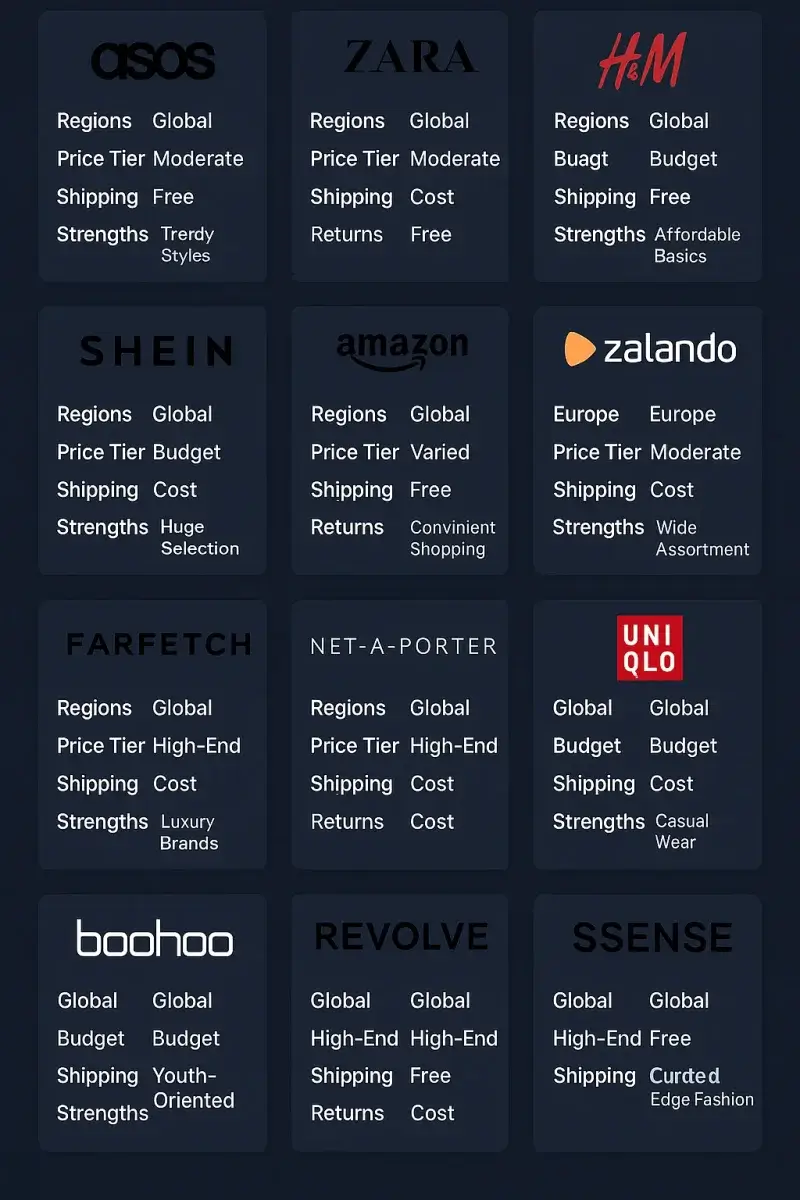
| ASOS | Clothing, accessories, beauty | $–$$ | Category depth, inclusive sizing, excellent product data and SERP visibility |
| Zara | Fashion apparel & accessories | $–$$ | Fast runway-to-rack, consistent PDP layout, strong store-to-web orchestration |
| Boohoo | Trend-led fast fashion | $ | Speed to market, visual-first PDPs, aggressive promo cadence |
| La Redoute | Fashion & homeware | $–$$ | Mobile-first design, lifestyle bundling, cross-category merchandising |
| Nike | Athletic wear & footwear | $–$$$ | Shoppable storytelling, fit tools, community & app ecosystem |
| H&M | Affordable fashion | $ | Editorial PDPs, sustainability signals, reliable availability |
| Uniqlo | Everyday wear, tech fabrics | $ | Utility-forward merchandising, clear value props (HEATTECH/AIRism), clean UI |
| Next | Fashion & home | $–$$ | Information-dense PDPs above the fold, omnichannel options |
| Nordstrom | Premium & luxury multi-brand | $$–$$$ | Assortment authority, elite service/returns, personal styling |
| Bonobos | Menswear | $$ | Fit-first ethos, concierge service, simple assortment architecture |
| Joules | Outdoor & lifestyle | $–$$ | UGC integration, social proof (views, purchases), scarcity messaging |
| Amazon Fashion | Marketplace + private labels | $–$$$ | Range, convenience, reviews, Prime delivery |
| Revolve | Contemporary designer | $$–$$$ | Influencer engine, curated edits, event-driven drops |
| Fashion Nova | Trend & curve-inclusive | $ | Size inclusivity, celebrity-inspired looks, social-native selling |
| Net-a-Porter | Luxury & designer | $$$ | Meticulous curation, editorial excellence, elevated unboxing |
| Forever 21 | Young fashion | $ | Broad trend assortment, frequent promos, accessible price points |
| Mango | Euro-chic apparel & accessories | $–$$ | Polished lookbooks, wardrobe capsules, consistent fit & fabrication |
| Fashion Nova (Curve) | Plus-size fashion focus | $ | Deep size runs, curve-specific imagery, fit transparency |
What Winners Have in Common in 2026?
Across very different brand identities, leaders share a few operational truths: rich product data (for SEO and Shopping feeds), PIM discipline, high-quality imagery/video, frictionless size/fit guidance, and clear post-purchase promises. They push hard on first-party data and owned channels to reduce paid dependency, while still leaning into Google Shopping and social commerce for efficient demand capture.
| Capability | What “Great” Looks Like | Why It Matters |
|---|---|---|
| Product Data Hygiene | Complete GTINs, attributes, structured schema, canonical tags | Improves organic rankings & Shopping feed quality scores |
| Visual Merchandising | 4–8 images + short video, true-to-life color, on-model & flat lays | Boosts conversion, reduces returns |
| Fit & Sizing UX | Size finders, body measurements, model stats, reviews with fit notes | Cuts uncertainty—the #1 cart killer for apparel |
| Performance Ads | Clean Merchant Center feeds, Performance Max, feed promos | Captures high-intent traffic; strong ROAS at scale |
| Post-Purchase | Fast shipping options, simple returns, proactive notifications | Increases repeat rate & LTV |
Retailer Deep Dives (Playbooks You Can Borrow)
ASOS
Why it works: ASOS nails the fundamentals at scale—clear, mobile-first PDPs where critical info (price, size, color, delivery/returns) remains visible, and a search experience that actually helps you narrow thousands of SKUs without fatigue. Their inclusive size strategy (petite, tall, curve, maternity) and marketplace-like brand breadth make ASOS a default destination for outfit building.
Performance channels: High-quality feeds power strong visibility in Google Shopping. ASOS structures attributes (material, silhouette, occasion) so search engines and on-site search both “understand” the garment, not just the title.
Borrow this: Add a 20–30s fit video per hero SKU, and keep a persistent “Delivery & Returns” capsule above the fold. Treat PDPs like landing pages—most Shopping users won’t see your homepage first.
Zara
Why it works: Zara’s “all-at-a-glance” PDP design reduces cognitive load: imagery on one side, stable sizing/price/availability on the other. Their “What’s my size?” and in-store stock checkers close the confidence gap for hesitant buyers and support hybrid pickup behaviors.
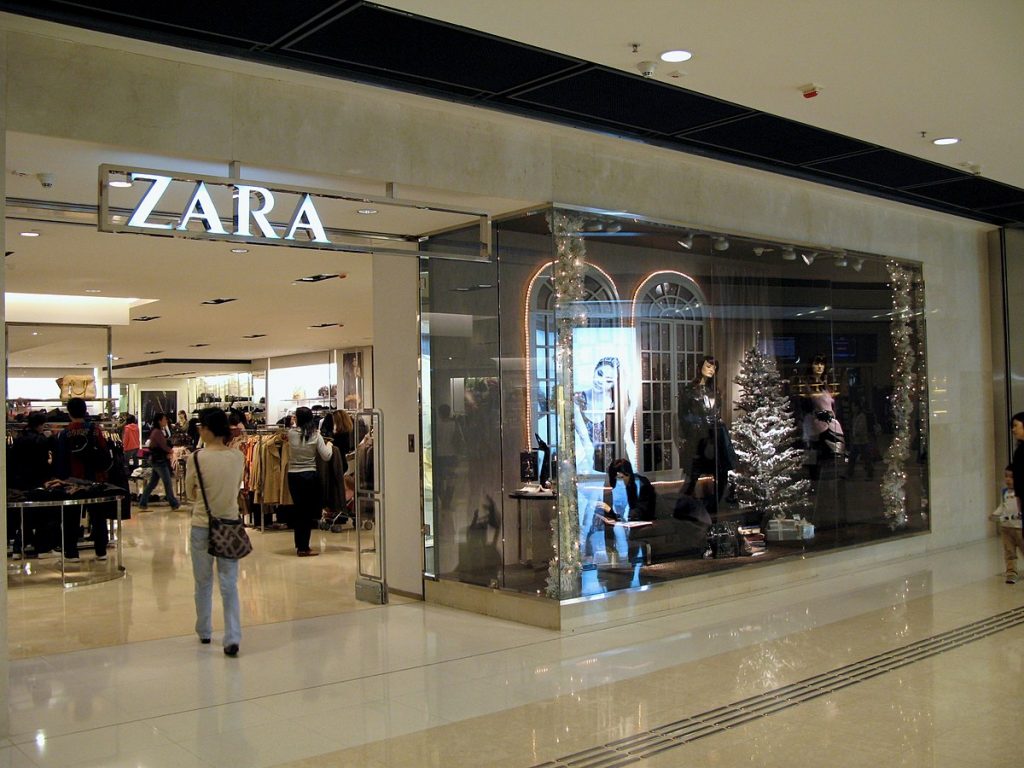
Editorial edge: Photography is brand language. Minimal copy, strong visuals, rigid grid. Zara proves you can sell aspiration without writing a novel—if your imagery does the heavy lifting.
Borrow this: Standardize your PDP layout and keep interaction costs low. If customers need to scroll to find size guidance or returns, you’re bleeding conversions.
Boohoo
Why it works: Boohoo goes visual-first (imagery commanding ~50% of the viewport), with “style notes” that blend description and advice. It’s less about materials science, more about how to wear it tonight. Aggressive newness + promos keep shoppers refreshing.
Performance channels: A heavy Google Shopping footprint (with clean variant mapping and price extensions) counters the short lifecycle of trend product.
Borrow this: Replace generic bullets with “how to style” copy, then surface colorways and related looks as a mini capsule to grow basket size.
La Redoute
Why it works: A mobile-native layout and lifestyle bundling (“Complete the look” and room/outfit sets) make cross-category shopping intuitive. International Shopping campaigns let them arbitrage CPCs across markets.
Borrow this: Build “buy the look” modules that auto-populate with size and color sync, so shoppers can one-tap add a full ensemble to cart.
Nike
Why it works: Nike’s footwear PDPs lead with angles and movement, then answer fit questions above the fold. The brand’s owned apps, membership, and content (running plans, drops calendars) create an ecosystem where commerce feels like consequence—not the only goal.
Borrow this: Pair product with purpose. If you sell performance gear, include training plans, care guides, or challenges that connect use with purchase.
H&M
Why it works: H&M sharpened its PDPs to mirror Zara’s scannability but layers in accessible sustainability signals (materials, care, recycling). Big, scrollable imagery with restrained copy invites quick decisions.
Borrow this: Add “Conscious”/sustainability capsules on PDPs with simple, verifiable claims. Shoppers reward clarity over vague greenwashing.
Uniqlo
Why it works: Uniqlo sells utility as a feature. Tech fabric branding (HEATTECH, AIRism) plus honest, straightforward PDPs and predictable fit build trust. The UI is calm, with generous white space and brand-red promo flags that never overwhelm.
Borrow this: Name your fabric innovations and explain them in one line, then reinforce with a simple icon set. Shoppers remember concepts more than fiber percentages.
Next
Why it works: Information-dense PDPs that keep everything critical above the fold: size, variants, color, fit tools, local availability, and delivery options. It looks busy at first glance—but it reduces click debt.
Borrow this: For multi-variant SKUs, avoid burying options behind extra clicks. Keep variant pickers persistent and clearly labeled.
Nordstrom
Why it works: Assortment authority plus concierge-level customer care. Their liberal returns and strong styling support create high confidence for premium purchases. Editorial and product detail coexist without friction.
Borrow this: Add “Talk to a stylist” or asynchronous fit help. Premium AOVs demand premium handholding.
Bonobos
Why it works: Bonobos simplified menswear by anchoring on fit: multiple fits across a tight set of categories (pants, shirts) and customer service that fixes problems, fast. Their “Guide Shops” complement eCom without complexity.
Borrow this: Build a fit matrix and keep it visible. Men’s conversion jumps when fit risk is reduced to a clear choice model.
Joules
Why it works: Real-time social proof (“x people viewing,” “purchased n times today”) and rich UGC. Subtle scarcity cues raise urgency without resorting to spammy pop-ups.
Borrow this: Integrate count-based signals on PDPs and collection pages; pair with back-in-stock alerts to recover demand.
Amazon Fashion
Why it works: Unmatched range, convenience, social proof, and fast shipping. For brands, it’s both a sales channel and a discovery engine—if listings are optimized with correct GTINs, clean titles, and A+ content.
Borrow this: Even if you prioritize DTC, build an Amazon listing playbook to capture search intent you can’t economically win elsewhere.
Revolve
Why it works: Revolve combines tight curation with an influencer-powered media network. Edits and event capsules (weddings, trips, festival) compress the choice set and speak to specific moments.
Borrow this: Build moment-based merchandising (capsules for “office to evening,” “long weekend,” “guest of wedding”). Context sells.
Fashion Nova
Why it works: Social-native brand language, curve-inclusive imagery, and lightning-fast celebrity-inspired trend translation at accessible price points.
Borrow this: Release micro-drops tied to cultural spikes and show every hero style on multiple bodies. Fit confidence drives conversion and lowers returns.
Net-a-Porter
Why it works: Luxury is storytelling plus service. Net-a-Porter’s edit, editorial voice, pristine packaging, and white-glove delivery all reinforce value and justify the premium.
Borrow this: If you play premium, let every touch point whisper “care”—from copy tone to tissue paper to return instructions.
Forever 21
Why it works: Broad, budget-friendly trend selection and constant promotions keep baskets moving. Extended sizing reflects a more inclusive baseline.
Borrow this: Calendarize promos and ensure they’re mirrored in feed price annotations for Shopping so ad clicks match on-site pricing.
Mango
Why it works: A polished Euro-chic aesthetic, consistent fits, and capsule lookbooks. Visual storytelling simplifies outfitting and reduces returns.
Borrow this: Lead collection pages with editorial hero images, then map those looks directly to shoppable SKUs below.
Channel & CX Benchmarks (What to Emulate)
| Retailer | Shopping Feed Maturity | Fit Tools | UGC/Reviews Depth | Returns Promise |
|---|---|---|---|---|
| ASOS | Advanced (rich attributes, variants) | Size finder, model stats | High | Generous, streamlined |
| Zara | Advanced | “What’s my size?”, store stock | Medium | Clear, practical |
| Boohoo | Advanced | Guides + model height | Medium | Promo-aligned |
| Nike | Advanced | Fit tips + community | Medium | Strong member policy |
| H&M | Advanced | Fit notes + materials | Medium–High | Simple online returns |
| Uniqlo | Advanced | Detailed measurements | Medium–High | Predictable, clear |
| Nordstrom | Advanced | Stylist support | High | Industry-leading |
| Revolve | Advanced | Model/fit descriptors | High | Premium experience |
| Fashion Nova | Advanced | Curve imagery & notes | High | Clear, straightforward |
How Google Shopping & Performance Max Fit the Picture in 2026
Shopping remains the highest-intent real estate for apparel. Winning retailers treat their Merchant Center feed as a product in itself: accurate GTINs, consistent sizing attributes, detailed color/material/occasion tags, clean titles (Brand + Gender + Product Type + Key Feature + Color + Size Model), and image hygiene (no watermarks, minimal text). Performance Max now helps balance prospecting and remarketing across formats; leaders control it with audience signals, custom labels (e.g., margin tiers, seasonality, inventory health), and promotion feeds synced to site banners.
Sustainability & Inclusivity: Not “Nice to Have”
Shoppers increasingly expect brands to show their work: material composition, repair or resale options, recycling programs, and fair-labor commitments explained in plain language. H&M’s garment collection program, Uniqlo’s durability story, and Nike’s product care content are examples of translating values into concrete actions. Size-inclusivity is a baseline expectation—brands like Fashion Nova and ASOS that show key pieces on multiple bodies reduce returns and build trust.
Five Fast Wins You Can Implement This Quarter
1) Turn PDPs into landing pages. Keep price, size, color, delivery/returns, and add-to-cart visible without scrolling; add a 20–30s on-body video; place “Complete the look” above reviews.
2) Fix your feed. Audit GTINs, titles, and attributes; add custom labels for margin and season; sync promotions to Merchant Center; ensure image variants match selected color.
3) Reduce fit anxiety. Add model stats and fit notes to reviews; include a size-finder; publish a one-paragraph “How it fits” for top sellers.
4) Add social proof without shouting. Display recent purchases and views count on PDPs; prioritize UGC near ATC for social-first audiences.
5) Make returns a selling point. Surface return policy wherever delivery is shown; shorten refund timelines; offer printable-less labels or QR drop-offs.
Methodology Note
This overview synthesizes widely observed best practices across leading fashion retailers’ public-facing eCommerce experiences, feed tactics, and merchandising patterns as of 2026. It’s meant to be a practical playbook: adopt, adapt, and evolve it to your category, margin profile, and brand voice.
Retailer Snapshot Sections (Extended Reference)
Below is a compact reference you can share with teams when auditing category pages, PDPs, or feed health.
| Retailer | PDP Signature | Search/SEO Angle | Merchandising Notes |
|---|---|---|---|
| ASOS | Sticky essentials, short try-on video | Rich attributes, inclusive filters | Marketplace breadth + private label |
| Zara | Split layout, minimal copy | High authority, brand-led | Drop cadence tied to trends |
| Boohoo | Image-dominant, “style notes” | Fast indexing, promo schema | Relentless newness |
| La Redoute | Looks and bundles | Home + fashion crossover | International Shopping arbitrage |
| Nike | Multi-angle shoes, fit tools | Content + community tie-in | App ecosystem & membership |
| H&M | Editorial photos, sustainability | Evergreen basics + trends | Strong kids & home categories |
| Uniqlo | Calm layout, tech fabric story | Utility keywords (warmth, breathability) | Repeatable core programs |
| Next | Info dense, local stock | Brand aggregation strength | Great for family outfitting |
| Nordstrom | Premium imagery, service CTAs | Brand + category authority | Buy online, pick up in store |
| Bonobos | Fit matrices, simple choices | Fit-first search terms | Few categories, many fits |
| Joules | UGC + social proof | Lifestyle keywords | Outdoor & country-lifestyle |
| Amazon Fashion | Review-rich, A+ content | Title/GTIN discipline | Private label alongside brands |
| Revolve | Event capsules, influencer edits | Designer & occasion SEO | High ASP, affiliate performance |
| Fashion Nova | Multiple-body imagery | Trend & celebrity SEO | Curve-first merchandising |
| Net-a-Porter | Luxury copy + packaging | Brand/editorial authority | Capsule storytelling |
| Forever 21 | Promo-forward, quick add | Trend keyword velocity | Frequent “new in” refresh |
| Mango | Polished lookbooks | Capsule/wardrobe SEO | Occasion dressing strength |
| Fashion Nova (Curve) | Curve imagery + fit tips | Inclusive size terms | Deep size runs available |
Conclusion
The fashion eCommerce leaders of 2026 aren’t just selling beautiful clothes; they’re eliminating friction at every step—from discovery to decision to delivery—and reinforcing brand value through every pixel and parcel. Whether your ambition is ASOS-level breadth, Zara’s runway reflexes, Uniqlo’s utility, or Net-a-Porter’s luxury theater, the path runs through the same pillars: meticulous product data, persuasive PDPs, trustworthy fit guidance, thoughtful performance marketing, and a post-purchase experience that makes customers want to return (with a friend, not a return label).
Start with the five fast wins above, tighten your Shopping feeds, and treat your product pages like your best-performing ads. The brands listed here have shown that in a market this crowded, what separates the good from the great is not a single genius idea, but thousands of tiny, disciplined decisions made every week.



[…] 5 pixels less in sixe, just change the size of the font and place your next letter in the same fashion. You may even want to go farther and make the letters look like they lay and fall to the side, by […]
[…] from the past several years, to the future predictions of Google Mobile, it’s time for SEO to fashion a brand strategy that provides results, just like PPC or social media […]
[…] source http://www.toptut.com/top-18-online-fashion-retailers/ […]
[…] as a leading e-commerce platform. Their enticing range of trendy, affordable clothing has set the fashion world ablaze, bringing forth a golden opportunity for you – the SHEIN Affiliate Program. Today, […]
[…] instance, ASOS, a leading online fashion retailer, uses videos for many of their products. Shoppers can see how clothes look and move on a […]
[…] Choose themes, outfits, and locations. It’s a fun creative exercise and produces content for fashion or lifestyle […]
[…] First, start your search by checking out the top copywriting agencies in your area or industry. Look for agencies that have experience in your specific niche, whether it’s healthcare, technology, or fashion. […]
[…] your niche and stick with it. Whether it’s posting about fashion, beauty, or gaming, hone in on what you’re passionate and knowledgeable about. This will help […]
[…] meaning you may join many affiliate programs from renowned brands and retailers. This includes the fashion and beauty industries as […]
[…] An ad-free platform focused on art, photography, and fashion. […]
[…] it’s a specific filter, editing style, or type of content (such as fashion flatlays or food shots), develop a signature look that sets your content […]
[…] and post in the lifestyle niche, you might want to be more specific – perhaps you’ll post about fashion, food or parenting, for example. You don’t have to stick religiously to posting this type of […]
[…] demand, such as healthcare or technology? Or are you in a more saturated market, such as beauty or fashion? Understanding how in-demand your services are can help you adjust your rates […]
[…] you’re a fashion enthusiast, a minimalist looking to declutter your wardrobe, or simply need some extra income, […]
[…] you’re a fashion enthusiast and have a popular blog where you showcase the latest trends. You partner with a […]
[…] you passionate about luxury fashion and looking for a way to turn that passion into profits? Look no further than the Farfetch […]
[…] search engine visibility by 200% for a Melbourne-based fashion […]
[…] Many other alternatives are available, some of which are businesses, people, office spaces, fashion, scenery, animals, and plenty more. In point of fact, the variety of items available is so rich in […]
[…] organic traffic by 80% for a Magento store in the fashion […]
[…] you tired of using traditional sketching methods for your fashion designs? Upgrade your skills and switch to digital fashion illustration! Creating stunning fashion […]
[…] you a fashion enthusiast with a knack for monetizing your blog? Look no further than the Revolve Affiliate […]
[…] of your mobile device? Customers can shop online with AR wherever they are right now! Italian fashion company Gucci has launched an iOS app that allows consumers to try the shoes from their Ace range. […]
[…] our campaigns and focus on high-performing affiliates.” – Marketing Manager of a fashion […]
[…] for discovering and sharing inspiration. Whether you’re looking for home decor ideas, fashion inspiration, recipe ideas, or DIY projects, Pinterest has got you […]
[…] Product Selection: AliExpress boasts millions of products across various categories, ranging from fashion and electronics to home decor and health products. This vast selection ensures that you will always […]
[…] printing are numerous, from personalized t-shirts for a special event to small-batch production for fashion […]